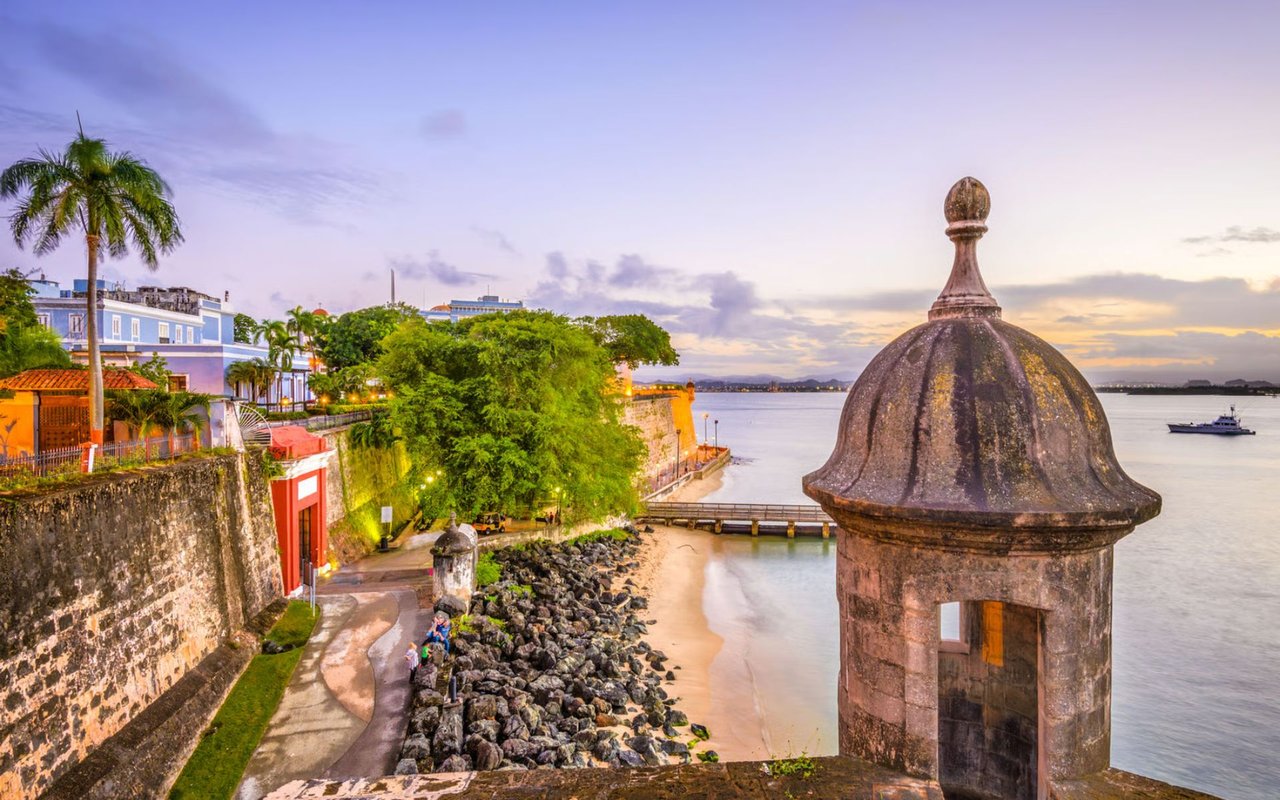
On Calle de la Cruz, a bathhouse and gym called Las Ruinas opened its doors late last year after three years of reconstruction inside a historic building. Nobody involved in that project was inexperienced or under-resourced. The renovation still took three years to get from concept to opening night. A few blocks away, Hotel El Convento is marking its 375th year in the walled city with an $8 million modernization that includes expanding into the neighboring 1949 José "Popi" Alegría Building, a project a global hospitality brand with deep pockets is still working through on the district's terms, not its own.
If you're shopping for a historic property in Old San Juan, the number you'll see quoted most often is a due diligence and approval window of six to twelve weeks. That number is real, but it describes clearing paperwork, not finishing a renovation. The clock that actually determines when you move in, or when your investment starts producing rent, has two hands. One belongs to the Instituto de Cultura Puertorriqueña, the government agency charged with protecting the district's UNESCO-listed fortifications and colonial character. The other belongs to the San Juan municipal Permits Office. They don't run at the same time, and neither one starts until the previous one has finished its work.
Two agencies, one sequence
The Institute isn't a design consultant you loop in for advice. It's the gatekeeper for anything that touches the visible or historic fabric of a building in the district, from paint colors and door styles to the shape of an archway. Nothing proceeds without its sign-off, and it doesn't share a review calendar with the city.
The actual sequence, based on how one owner who restored an 18th-century property in the district described the process, runs roughly like this:
- Meet with the Institute and get preliminary design approval before any construction planning begins.
- Once that design is approved, your architect prepares full construction and permit drawings.
- Those drawings go to the San Juan municipality's Permits Office, along with separate fees paid to the State Insurance Fund Corporation and San Juan's Finance Office.
- The city issues an "Approved Notification for the Construction Permit," which spells out remaining conditions before a Final Construction Permit is granted.
- Depending on the property, an Archaeological Evaluation from the Institute may still be required before work can start.
Step one has to close before step three can open. If the Institute asks for revisions to your design, the municipal review doesn't get a head start while you wait. It hasn't opened its file yet. That's the mechanism most renovation-cost estimates leave out: the six-to-twelve-week figure covers assembling your professional team and getting through initial reviews. It doesn't cover what happens once conditions attached to the Final Construction Permit meet whatever the Institute required at the design stage, and it says nothing about how long actual construction takes once permits are in hand.
| What gets reviewed | Instituto de Cultura Puertorriqueña | San Juan Permits Office |
|---|---|---|
| Facade, color, door and window openings | Yes | No |
| Archaeological impact | Sometimes, property-dependent | No |
| Construction drawings and code compliance | No | Yes |
| Final Construction Permit conditions | No | Yes |
One owner who went through this on a colonial-era ruin summed up the gap between quoted and actual timelines plainly: "We were told it would take one year to remodel." The project ran three and a half years, though hurricane and earthquake damage in the years before the pandemic compounded the delay. Even setting aside disaster years, the structural point holds: a two-agency, sequential approval chain rarely resolves as fast as a single estimate suggests, and the well-capitalized projects at Hotel El Convento and Las Ruinas show the same pattern playing out on a multi-year timeline right now, not a decade ago.
The friction isn't limited to private buyers, either. In August 2026, Puerto Rico's Department of Transportation and Public Works revised its own design for a roundabout project near El Morro specifically to reduce the work's environmental and historical impact on the area. Even a government agency building a road has to answer to the same preservation logic that governs a homeowner's kitchen remodel. This isn't red tape unique to residential buyers. It's how anything gets built or changed inside the walls.
What the wait buys you
The reason buyers still pursue this is the exemption on the other side of it. Puerto Rico's historic zones tax exemption traces back to a 1955 law and now sits inside the island's Incentives Code, and it can offer significant relief on property taxes for a qualifying restoration, along with a reduction in permit costs once the Institute formally certifies the property. That certification step matters: the benefit isn't automatic on purchase, it's a reward tied to going through the process and getting the property recognized.
This is where buyers most often miscalculate. The tax exemption offsets the cost of ownership once a renovation is certified and complete. It does nothing to offset the carrying costs, financing costs, or opportunity costs of the months or years spent waiting on two agencies to finish talking to each other. A buyer who underwrites a project assuming the exemption will cushion delays is solving the wrong problem. The exemption rewards finishing. It doesn't insure against the wait.
Before committing capital to a restoration, confirm current eligibility and requirements with a Puerto Rico tax attorney rather than budgeting off a general description like this one. Programs and thresholds can be adjusted, and a decree or certification that applied to one property may not automatically apply to the next.
Why the scarcity math cuts both ways
Old San Juan's housing stock is capped by design. The district holds roughly 862 historic structures, and that number effectively cannot grow given the preservation rules that define the neighborhood. That scarcity has shown up in price. Reported figures put price per square foot in the district climbing from roughly $485 in 2019 to around $650 in 2024, a run that reflects limited supply as much as buyer demand.
Scarcity is usually framed as good news for owners, and over a long hold it typically is. But it cuts the other way for anyone mid-renovation who needs to exit early. If your project stalls on a permit condition and you need to sell before certification, there's no deep pool of comparable half-finished historic properties to normalize your price against. You're not selling into a liquid market segment. You're negotiating with whoever happens to want a specific kind of unfinished project at that specific moment. The same fixed inventory that supports long-term appreciation also means a buyer who can't absorb the full two-agency timeline is taking on real pricing risk if circumstances force an early sale.
That's the practical takeaway for anyone comparing a turnkey unit against a restoration project in the district. The discount on the restoration property isn't just compensation for the work ahead. It's compensation for the fact that you, not the market, are the one who has to carry both agencies' clocks to the end.
A few questions worth settling before you make an offer
Does every renovation in Old San Juan need Institute approval? Exterior changes, including facade work and paint colors, almost always require sign-off. Interior work that touches historic fabric such as original arches, walls, or door openings typically does too. Purely cosmetic interior updates may fall outside that requirement, but confirm the specific scope with your architect and the Institute before assuming anything is exempt.
How long should I actually plan for? Treat the six-to-twelve-week figure as the time to clear due diligence and get initial approvals in hand, not the time to finish. Recent projects in the district, including a major hotel modernization and a multi-year bathhouse restoration, have run into multiple years from concept to completion. Budget by the complexity of your specific property, not by the shortest number you're given.
Does the tax exemption make up for a slow timeline? It reduces the cost of owning a certified, completed restoration. It doesn't compensate you for financing costs or lost use of the property while you're waiting on approvals. Plan your liquidity around the wait itself, and treat the exemption as the payoff at the end rather than a hedge along the way.
Old San Juan rewards patience and specific expertise more than it rewards speed. If you're weighing a restoration project against a move-in-ready property in the district, or trying to figure out what a specific building's renovation history means for your timeline, INCANTO Real Estate & Relocation can walk through the property-specific version of this process with you. Book Your Call.