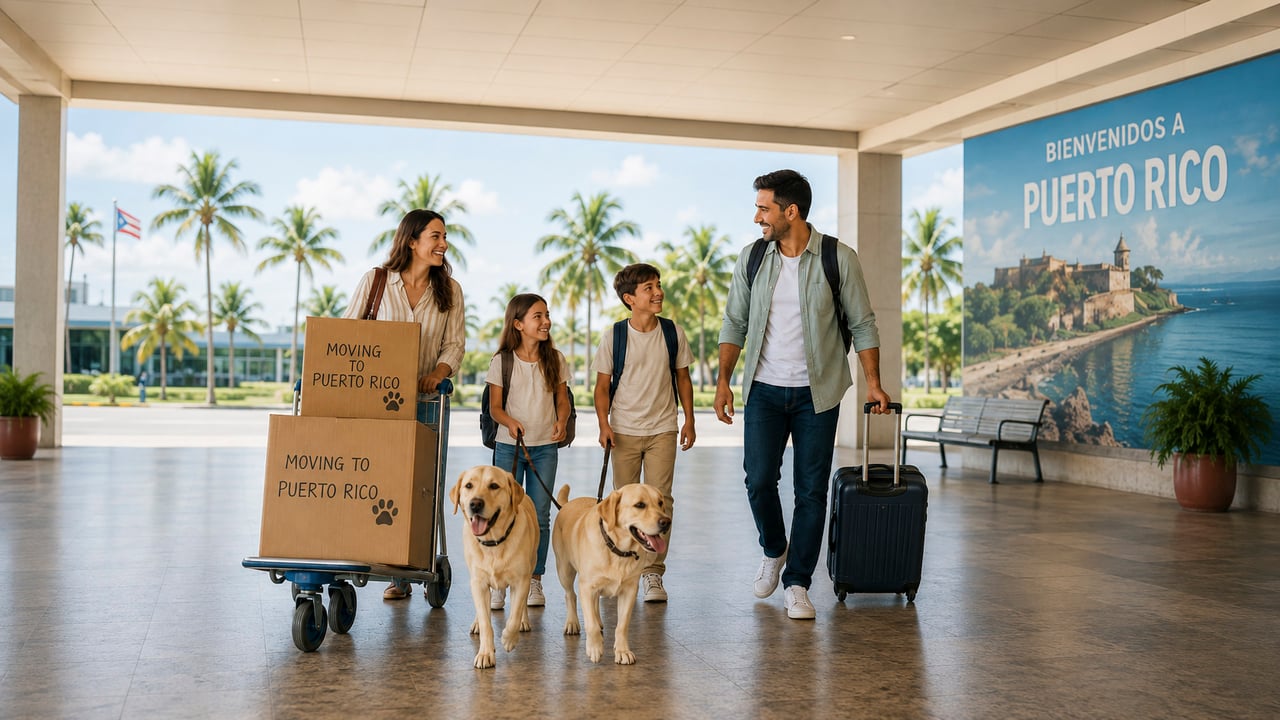
For most dog owners, leaving their pet behind is not an option. Your dog is part of the family, and planning a safe, comfortable trip is just as important as booking your own flight.
The good news is that traveling from the mainland United States to Puerto Rico with a dog is manageable when you prepare in advance. However, there are two separate sets of requirements to consider: Puerto Rico’s animal-entry rules and the policies established by your airline. Here is what you should know before you travel.
Confirm Your Airline’s Pet Policy Before Booking
Start by contacting the airline before purchasing your ticket. Pet policies vary considerably. Some airlines allow smaller dogs to travel in the cabin, while others may transport pets in the aircraft’s cargo area or through a separate cargo service. The carrier size, weight limit, fees, breed restrictions, and required documents can also differ from one airline to another.
Ask the airline:
- Can my dog travel on this specific flight?
- Is cabin travel available?
- What are the carrier dimensions and weight limits?
- Do I need to reserve my dog’s space in advance?
- Are there breed or seasonal temperature restrictions?
- What veterinary documents will I need at check-in?
- How early should I arrive at the airport?
Airlines may limit the number of pets permitted on a flight, so do not assume you can add your dog to the reservation later.
Requirements for Dogs Traveling From the United States
Dogs traveling to Puerto Rico from a U.S. state or territory are treated as an interstate movement. Puerto Rico establishes its own animal-health requirements for these arrivals.
According to the current Puerto Rico Department of Agriculture guidance available through USDA APHIS, dogs traveling from a U.S. state or territory do not need a Puerto Rico import permit. However, they must arrive with the required veterinary documentation.
Current Puerto Rico dog-travel checklist
Your dog should have:
- An official certificate of veterinary inspection signed by an accredited veterinarian.
- A statement confirming that the dog did not originate in an area quarantined for rabies.
- A valid rabies vaccination certificate for dogs older than four months.
- Rabies vaccination administered within the six months before travel, according to Puerto Rico’s published guidance.
- Treatment for external parasites within 72 hours before entry, documented on the health certificate.
- Official identification through a microchip or a collar with a metallic identification tag.
The health certificate is valid for 30 days from the veterinary inspection date. Because the parasite treatment must be administered within 72 hours before entry, the timing should be coordinated carefully with your veterinarian.
Requirements can change, so confirm them again before traveling.
Schedule the Veterinary Appointment Early
Do not wait until the last few days before your flight to contact your veterinarian. Let the office know that you are traveling to Puerto Rico and need an official certificate of veterinary inspection. Confirm that the veterinarian is accredited and familiar with interstate pet-travel documents.
Provide the veterinarian with:
- Your exact travel date
- Your flight information
- Your destination address
- Your dog’s vaccination records
- Microchip or identification information
- Any additional forms requested by the airline
Before leaving the appointment, review every detail on the certificate. Confirm that your name, destination, travel date, dog’s description, vaccination information, and identification number are correct. Even a small mistake may cause unnecessary delays at the airport.
Help Your Dog Adjust to the Carrier
Your dog should become familiar with the travel carrier before the day of the flight.
Leave the carrier open at home and place familiar bedding, treats, or a favorite toy inside. Allow your dog to enter and rest in it without pressure. Gradually increasing the amount of time spent inside can make the carrier feel less intimidating.
Make sure the carrier:
- Meets the airline’s dimensions.
- Provides sufficient ventilation.
- Closes securely.
- Has absorbent material inside.
- Includes clear identification and contact information.
For in-cabin travel, the carrier is generally treated as carry-on baggage and must comply with the airline’s under-seat requirements. Keep the original health documents with you rather than placing them in checked luggage.
What to Pack for Your Dog
Prepare a small, easily accessible travel bag containing:
- Leash and secure harness
- Collapsible water bowl
- Absorbent carrier pads
- Small supply of regular food
- Necessary medication
- Waste bags and cleaning supplies
- Copies of veterinary records
- Recent photograph of your dog
- Contact information for your veterinarian
Ask your veterinarian how to manage food, water, medication, or travel anxiety. Avoid giving your dog a sedative unless it has been specifically recommended by the veterinarian who knows your pet’s health history.
Preparing for Arrival in Puerto Rico
Your planning should continue beyond the airport.
Before traveling, identify a veterinarian and emergency veterinary clinic near your new home or temporary accommodation. Pack enough familiar food and medication for the first several days so you do not have to search for supplies immediately after arriving.
You should also confirm that your hotel, rental property, condominium, or residential community permits your dog.
Do not rely only on the words “pet friendly.” Ask whether there are restrictions involving:
- Number of pets
- Weight or size
- Breed
- Common-area access
- Required deposits or fees
- Association registration
- Outdoor and leash rules
If you are purchasing or renting in a condominium, gated community, or resort, review the applicable documents before making a commitment.
Traveling From Outside the United States
Different federal requirements apply when a dog arrives directly from another country.
Puerto Rico is considered part of the United States for federal dog-importation rules. Each dog entering the United States from abroad requires a CDC Dog Import Form. The owner must retain the receipt and may need to show it to the airline and U.S. Customs and Border Protection.
The remaining requirements depend on where the dog has been during the six months before arrival.
Dogs arriving from dog-rabies-free or low-risk countries must generally be at least six months old, appear healthy, and have a microchip readable by a universal scanner.
Dogs that have been in a high-risk country may require additional rabies documentation, USDA-endorsed forms, testing, or specific arrival arrangements.
International travelers should use the CDC’s Dog Importation Navigator and verify both federal and Puerto Rico requirements well before booking a flight.
Relocating to Puerto Rico With Your Dog
Bringing your dog to Puerto Rico is only one part of the relocation process.
Your pet may influence the type of property you choose, the amount of outdoor space you need, and the community where your family will be most comfortable. Condominium rules, homeowners’ association policies, proximity to veterinary care, and access to safe walking areas may all affect your decision.
At INCANTO Real Estate & Relocation, we help families look beyond the property itself. Our relocation services may include assistance identifying pet-friendly housing, evaluating community considerations, coordinating property tours, and preparing for a more organized transition into your new home. Because finding the right place is not only about bedrooms, location, or price. It is about making sure every member of the family feels at home.
Frequently Asked Questions
Does my dog need an import permit to enter Puerto Rico?
Dogs traveling from a U.S. state or territory do not currently need a Puerto Rico Department of Agriculture import permit for interstate movement. They must still meet the applicable health-certificate, vaccination, parasite-treatment, and identification requirements.
Does my dog need a health certificate?
Yes. Puerto Rico’s published requirements call for an official certificate of veterinary inspection signed by an accredited veterinarian. The certificate is valid for 30 days from the inspection date.
Can my dog travel in the airplane cabin?
Possibly. Cabin eligibility depends on the airline, your dog’s size, the approved carrier, the aircraft, and available pet space. Confirm your dog’s reservation directly with the airline before purchasing your ticket.
Is a microchip required?
For interstate travel to Puerto Rico, the published requirements allow a microchip or a collar with a metallic identification tag. Dogs entering from another country are subject to federal CDC rules, which generally require a universally readable microchip.
Planning a Move to Puerto Rico With Your Dog?
Relocating with a pet involves more than selecting a flight. The right home and community should support the way your entire family lives.
At INCANTO Real Estate & Relocation, we can help you explore housing options, understand community considerations, and plan your transition to Puerto Rico with personalized real estate and relocation guidance. Schedule your consultation at [email protected]
DISCLAIMER This article was reviewed in July 2026 and is provided for general informational purposes. Animal-entry and airline requirements may change. Before traveling, confirm the current requirements directly with the Puerto Rico Department of Agriculture, USDA APHIS, CDC when applicable, your accredited veterinarian, and your airline